
Prairie Madness
or Prairie Fever. Yes, it's a real thing. || October 2025 newsletter 🌱

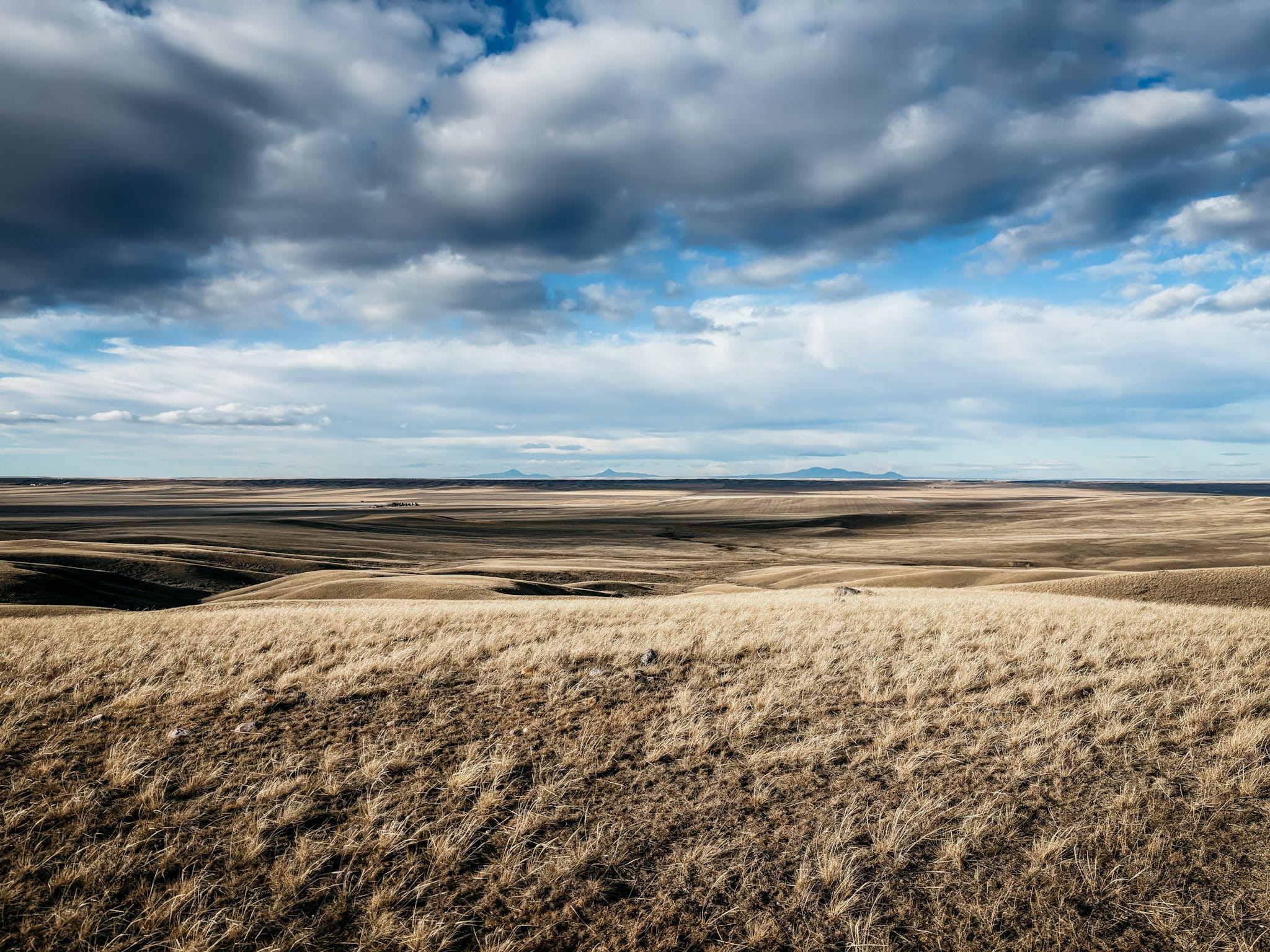
A few days ago, I Googled,1 “Did people go crazy from the wind on the prairie in the 1900s?” I realize this is super specific, but I was fairly certain there had to be evidence of what I assumed to be true.
As I write this, the wind is howling outside, and the vent in the kitchen clacks every few seconds. The remaining leaves on the tree in our front yard are holding on for dear life, but it’s mostly bare. The few beautiful weeks we get of fall—the vibrant colors, warm/cool temps (warm during the day, cool/cold in the mornings & evenings)—are quickly disappearing.
According to Wikipedia, the answer to my question is: Yes. Prairie madness, or prairie fever, was an affliction that affected European settlers in the Great Plains during their migration to and settlement of the Canadian Prairies and the Western United States in the 19th century. Settlers moving from urbanized or relatively settled areas in the East faced the risk of mental breakdown caused by the harsh living conditions and the extreme levels of isolation on the prairie. Symptoms of prairie madness included depression, withdrawal, changes in character and habit, and violence. Prairie madness sometimes resulted in the afflicted person moving back East or, in extreme cases, suicide. Prairie madness is not a clinical condition; rather, it is a pervasive subject in writings of fiction and non-fiction from the period to describe a fairly common phenomenon. It was described by the journalist, Eugene Virgil Smalley, in 1893: “an alarming amount of insanity occurs in the new Prairie States among farmers and their wives.”
I want to say “Yikes!” But honestly, I wasn’t surprised. I’ve always thought that people who lived out here generations before me had to be extremely strong and hardy. And who could have blamed those who didn’t stay?
The wind has been a topic of conversation everywhere I go this week. I’ve read several posts on Facebook about it, and read news stories of trailers blown over on the interstate. Our pastor mentioned it during his sermon on Sunday, and it came up on our drive home from church.
As we were leaving town, headed back to the farm, Rhett noticed a massive cloud of dust hanging over a field. Rich saw it too and said, “That’s soil blowing away. And you can’t get it back. We do everything we can to prevent that from happening. Our soil is our biggest asset.”2 The cloud got smaller and smaller in the rear-view mirror as we continued to drive home.
Later that afternoon, with the wind still howling outside, Rich said, “Let’s all go and check the cistern; it’ll be good for us to get outside.” Honestly, the last thing I wanted to do was go back out in the wind. I wanted to whine like the kids, but I knew he was right. So, I put on a warm hat, slipped on my Crocs (forever wearing inappropriate farm footwear), and jumped in the pickup, all of the kids and the dog piling in after me.
We bumped down the trail and cut through a pasture, while the big kids took turns driving through the gates when Rich got out to open them. Sometimes romance can feel dead when you’ve been married for years with three kids, but let me tell you—nothing is more romantic than when my husband doesn’t even ask me to get out and open the barbed wire gate in the wind! I stayed warm inside the pickup as we passed through several gates. And as Rich braced himself against the wind, I braced myself while Allie peered over the steering wheel, her feet barely touching the pedals, while her big brother gave “gentle” backseat driving tips to her.
As we neared the cistern, the tall grass rolled like waves—with nothing to see but the open prairie around us. I thought about the men and women who lived out here years and years ago. They had nothing to distract themselves from the wind—no TV, certainly no phones, and going far enough back, not even a radio. We live miles from our nearest neighbors, but we also have phones to keep in touch and can easily drive to and from our destinations, unlike the days of horseback riding and wagons.
So the story goes, my husband’s great-uncle, Johnny, who was a bachelor out here, would trot his horse—as the crow flies—about 22 miles to town every Friday to get the mail, then he would trot home in time for lunch. It was likely the only time he saw another person all week, besides his sister, who also lived on the ranch. The mail he picked up was their main connection to the outside world.
It’s not hard to imagine how prairie madness was a real thing, as I type, and the wind continues to blow as the tree branches scratch the roof.
I remember my first year of motherhood: I would sometimes go a week without leaving the house, and the only person I saw besides my baby was my husband. I could have driven to town, and I did when I had to. But in the early days, I felt anxious taking my baby out. It seems silly now, but when I put myself back in that year, I remember how overwhelming it felt to drive an hour (each way) to town with this tiny baby, who sometimes cried, knowing I would need to feed him multiple times. It felt easier to stay home and stick to his schedule, where my stomach didn’t clench and my skin didn’t tingle with the unknowns around me.
As we drove through the pasture, the kids commented on the cows, and Rich said, “These are bred heifers.” Even though I’m far from an expert on cattle, after 12 years on the farm & ranch, I could tell they were heifers before Rich said they were. (Patting myself on the back.) Heifers are a little smaller, not quite as tall, and often, they have a look about them I can only describe as “mischievous.” They look like cows, but behave like toddlers. Rich went on, “They’re first-time moms, and they’ll have their first calves this winter.”
Rhett peered out the window and replied, “They look like our mom!”
I turned to face him, raising my eyebrows, “Say what?”
He started laughing, throwing his head back, his adult teeth showing, “I mean, they look like the other cow moms, not our mom.”
“That’s better,” I said, smiling at him, a vague memory flashing before me. I pictured a winter day, his first winter, during calving season, when it was just the two of us home alone for hours while Rich worked in the barn, three miles away. Inside the house, it was bright, the sparkly blanket of snow reflecting through the living room windows. The sun was glaring, warming the house from the outside. The wind wasn’t blowing that day.
We continued driving, Nora sat on Rich’s lap, batting his hands away anytime he tried to help steer. Minutes later, we arrived at the cistern at the top of a hill. It’s a spot I’ve been to many times over the years, but each time, I’m in awe of how far I can see. Looking north, I could see the Sweet Grass Hills on the Canadian border, just under 100 miles away, yet I could see them straight out. When I looked south, toward where town is, I couldn’t see a speck of civilization. Our house wasn’t in sight either, as it was tucked beneath the hills miles away.
The kids ran up and down the brown rolling hills, their voices traveling on the wind. Rich checked the water level, then we all got back into the warm pickup and into the silence, away from the wind.
I couldn’t help but wonder if I would have been strong enough to survive out here if I had been born 100 years earlier. Or if I had been one of the people who took a train back East.
The kids chatted as they watched deer run through a wheat field we harvested this summer. Rich said, “Maybe the wind is like a clearing. It’s making room for something else.” I shrugged, nodding, knowing he was trying to put a positive spin on something we had no control over.
For him, it’s in his blood to be out here—his love for the land, the soil beneath our feet. My love doesn’t run quite as deep. I wouldn’t be here if it weren’t for him. My love is acquired, grown slowly over time.
The wind isn’t ideal. But I do know it signals the trees to grow a thicker trunk and denser wood. It forces their roots to dig deeper and wider. They’re strengthened by each storm.
The sun feels warmer and brighter after the wind passes through.
Farm Happenings
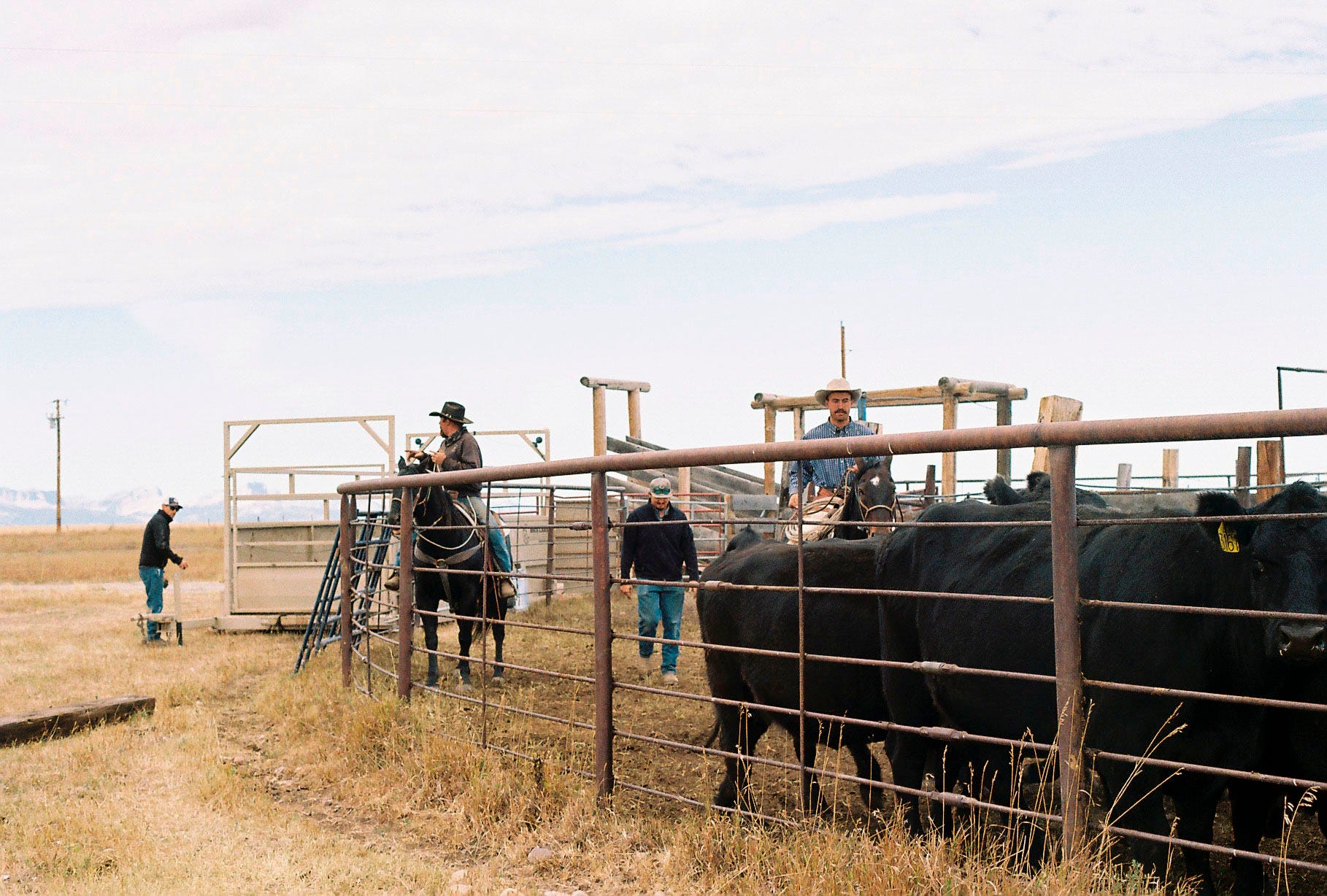
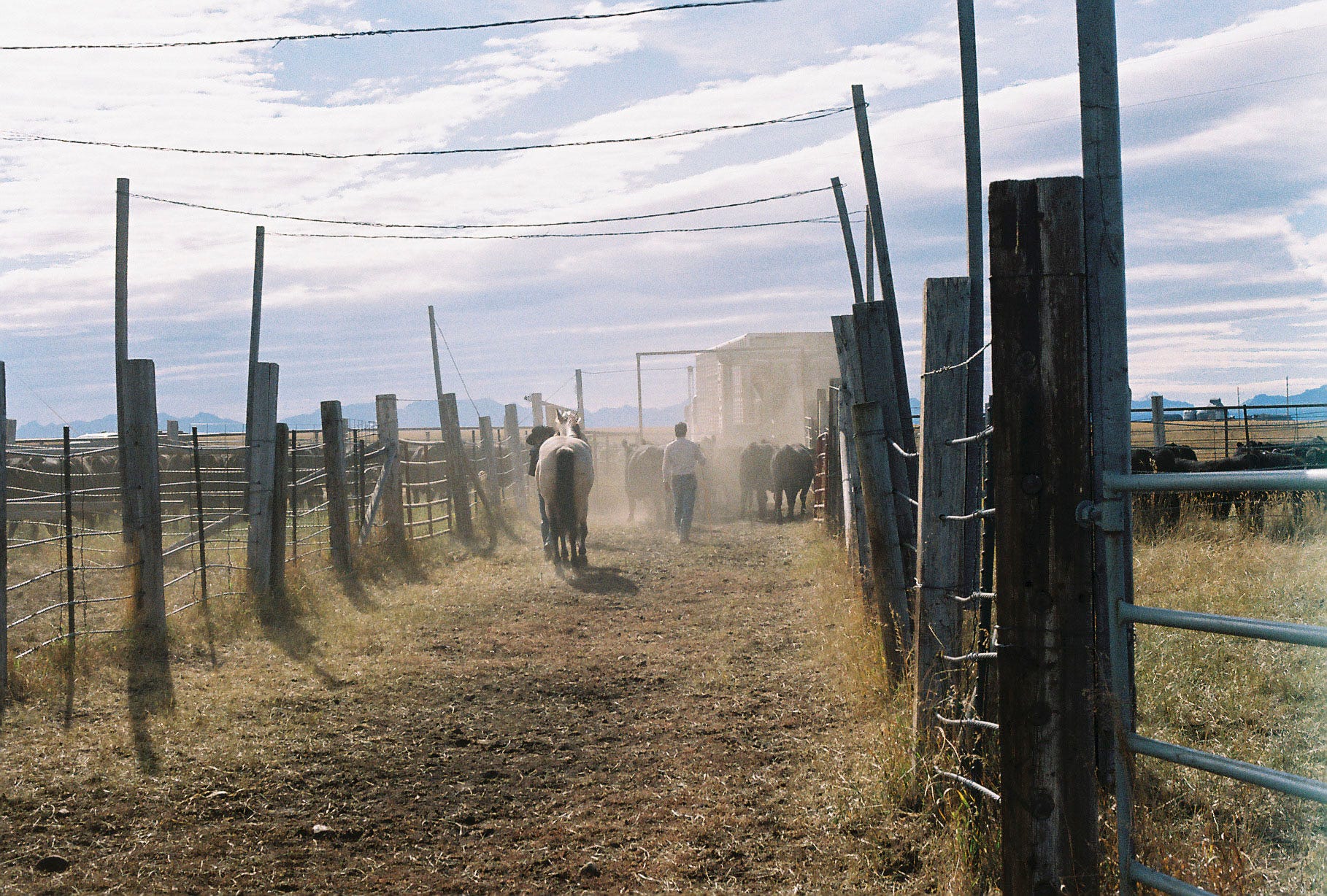
At the beginning of October, we shipped the steer calves. I shot some film on shipping day and was a little disappointed with how the roll turned out, but I’ll share a couple below.
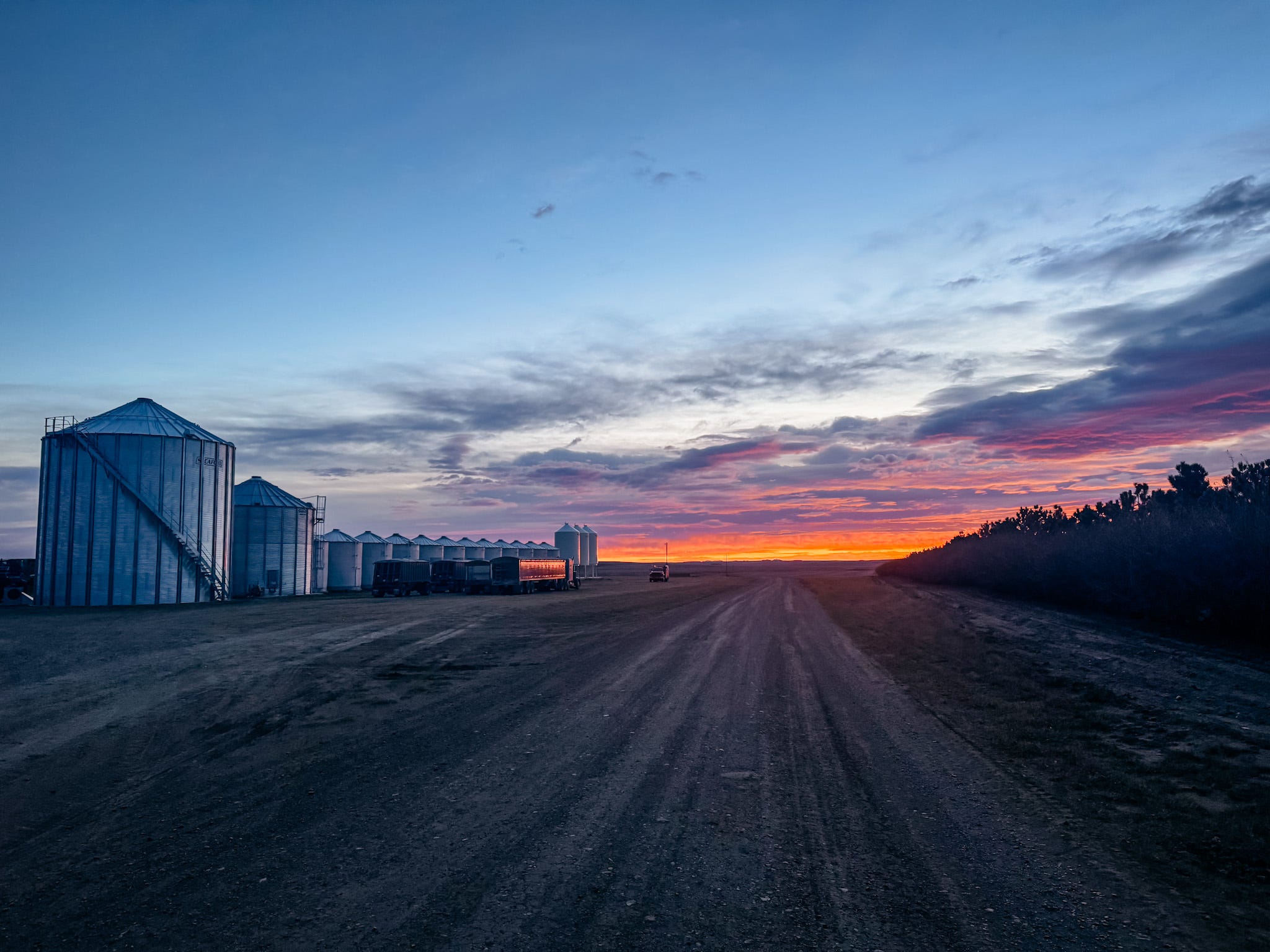
The farm crew continues to haul grain to the elevators, sending our wheat off to become flour. They’ve also been winterizing all equipment to prevent it from freezing during the coming winter months.
Up next: shipping the heifer calves, hauling more grain, and shop repairs to prepare for spring fieldwork. 🌾
Things I’m Loving . . .
As a kid, I was obsessed with Little House on the Prairie, and I also loved Sarah, Plain and Tall. (When I told a friend this recently, she said, “No wonder you ended up on a farm!”) This month, I’ve been on a juvenile fiction kick, and I re-read Sarah, Plain and Tall, Skylark, and My Father’s Words (all by Patricia MacLachlan). I’d never read My Father’s Words; it came out in 2018, and I loved it. After having Traveling Mercies on my nightstand for years, I finally read it. I also finished Praying Like Monks, Living Like Fools.
I’m almost finished reading True Things Last by Madison Aichele. For any creative who has wondered why their creative dreams haven’t come true, or why God placed a dream on their heart, but the path hasn’t gone the way they hoped, this book is for you. Each chapter ends with a creative blessing.
When you leave this one
beautiful, precious life, may all these messages
rise unbidden in the minds of those you cherish.
May they never wonder if you loved them. May they instead
wonder how to keep that love going,
like a chain that cannot be broken,
like a sunset frozen in time right when it is
so vibrant you can hardly bear the beauty.
Another Year Unfolding by Erin Mount
A few weeks ago, Rich and I watched F1: The Movie—loved it! Shout out to my public library for having it available to check out on DVD! The movie producer’s name sounded familiar, so I Googled it after we finished watching, and, not surprisingly, it’s the same guy who produced both Top Gun movies—two movies I love. It got me thinking that sometimes all we want is a good story—a little action, a little bit of love, no agenda, no violence, and good music. (Just me?) Jerry Bruckheimer gets it. I’ve been listening to the soundtrack on repeat since watching it. (Messy is my favorite on the soundtrack.)
After Diane Keaton passed away, I rewatched Baby Boom, a movie I had seen years ago. I also binged season two of Nobody Wants This.
People seem very reluctant to make tradeoffs in life. You can have your peace or you can have instagram. You probably cannot have both. At least, if that were true, which would you choose? It’s something worth thinking about. - How to End Your Extremely Online Era by Tommy Dixon
I recently discovered Emma Bland Smith’s children’s book The Fabulous Fannie Farmer. It’s a great picture book about someone I didn’t know much about. I’ve had The Fannie Farmer Cookbook on my shelf for years; it was my late aunt’s book. So it was fun to learn a little bit of the history behind the cookbook!
Did I need another pullover? Probably not. But I’m loving this one. I’ve never worn brown before, but maybe it’s my color?
I made these spider cookies for one of my kids for their classroom party. They turned out cute and were easy to make, other than the legs. I didn’t expect that to be such a challenge, so I delegated that job to Rich.
Finally, I wrote this essay during harvest and submitted it to a contest at the end of August. It’s a story I had never written about before, but in many ways, I had been writing it on my heart for twelve years. My essay placed second and was published earlier this month.3

That’s it for me. I’ve already made this newsletter super long, so if you made it to the end, thanks for reading. Good luck to the parents out there tonight as you trick-or-treat with your kids. I’ll be raiding their buckets for Reese’s peanut butter cups. 👻
Until next time,
Stacy
You’ll forever find me Googling, never asking ChatGPT. I have several issues with it, but as a parent, this story is horrifying, and Sam Altman should be ashamed.
Rich loves soil and talking about soil. Early in our marriage, he gently told me, “It’s soil, not dirt.”
This essay is behind a paywall, which I’m grateful for! I think I have a gift code if anyone wants to read it, and isn’t a paid subscriber to Coffee + Crumbs. Let me know!
Beautiful storytelling 😍😍 I visited the Isle of Orkney in the north of Scotland in September and what struck me was the seclusion and the wind. It reminded me of the American prairie but less vast and all I could think was “I bet this was hard a hundred years ago.”
Great piece Stacy! You have to admire those long ago settlers who braved the winds, cold and loneliness and yet were able to survive! Even now I think it is a lifestyle linked to the love of the land and love of your chosen profession. As always, I enjoy your writing!